If you’re using one case study to close a deal and build brand awareness, you’ll likely fail at both.
A prospect who has never heard of you needs a very different story than a prospect who is comparing your pricing against a competitor. Yet, most B2B marketers still treat customer stories as a one-size-fits-all asset.
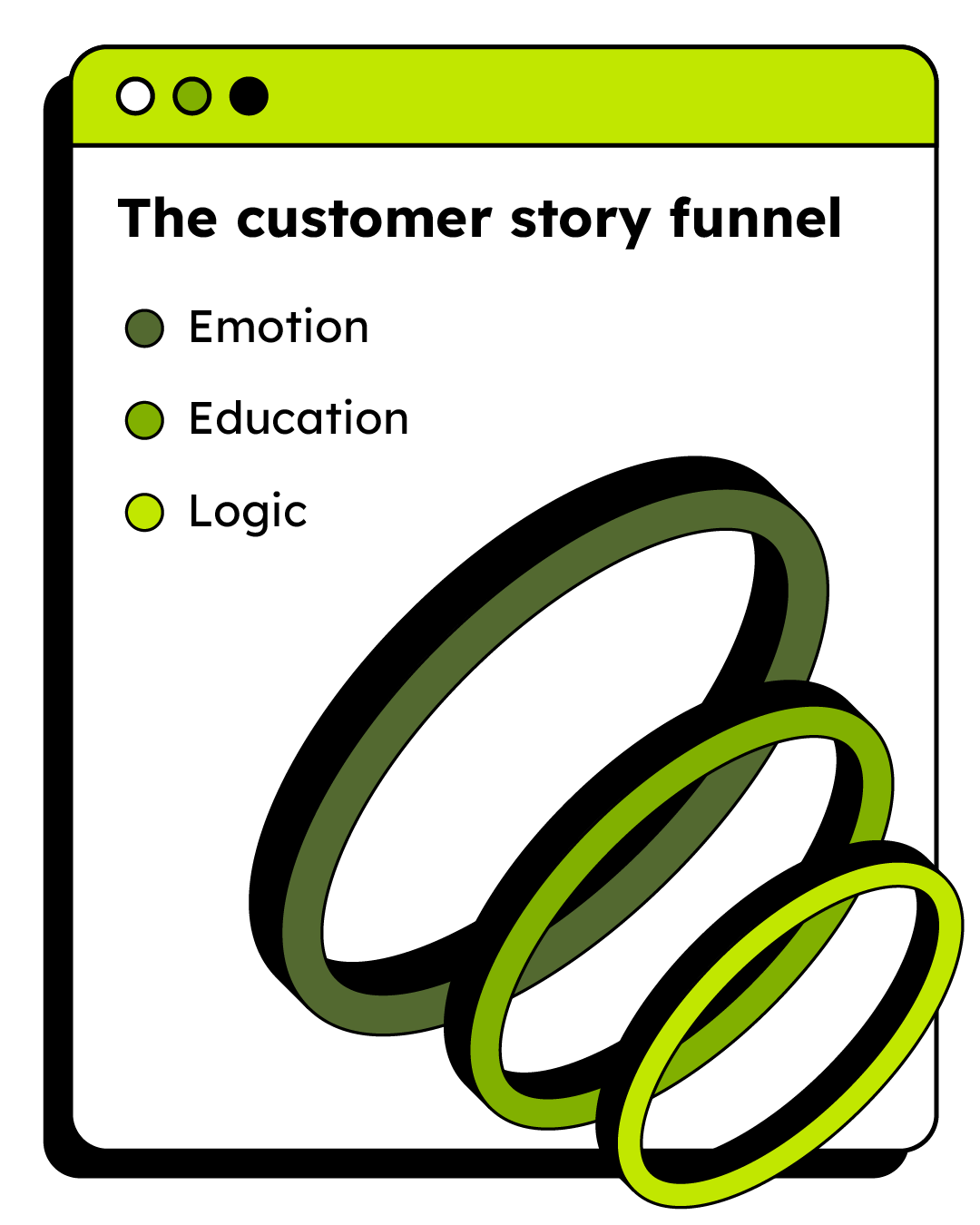
To drive real results, you need to map your stories to the buyer’s journey. By aligning specific formats and angles to the funnel stages, you ensure you’re answering the right questions at the right time.
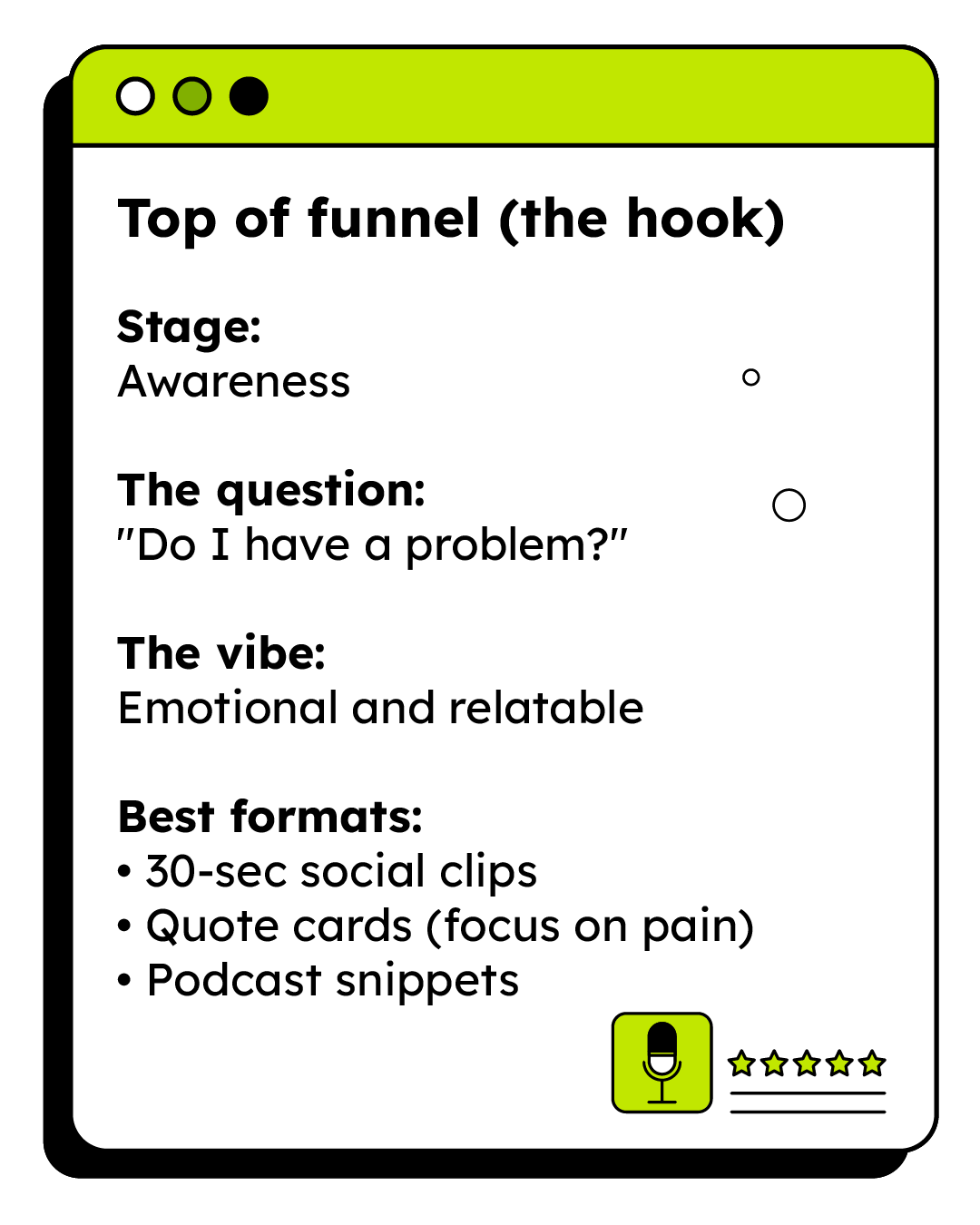
Top of the funnel (awareness): stop selling, start relating
At this stage, your prospect might not even know they have a problem yet. They aren’t looking for a vendor; they’re looking for validation of their struggle.
- The goal: grab attention and build emotional connection.
- The format: short video snippets, hero quote cards and problem-focused blog posts.
- The angle: focus on the “before”. Highlight the shared pain points and the human struggle. Don’t drown them in product specs.
- Example: a 30-second LinkedIn video where a CIO admits, “I was seriously worried our data migration would fail.”
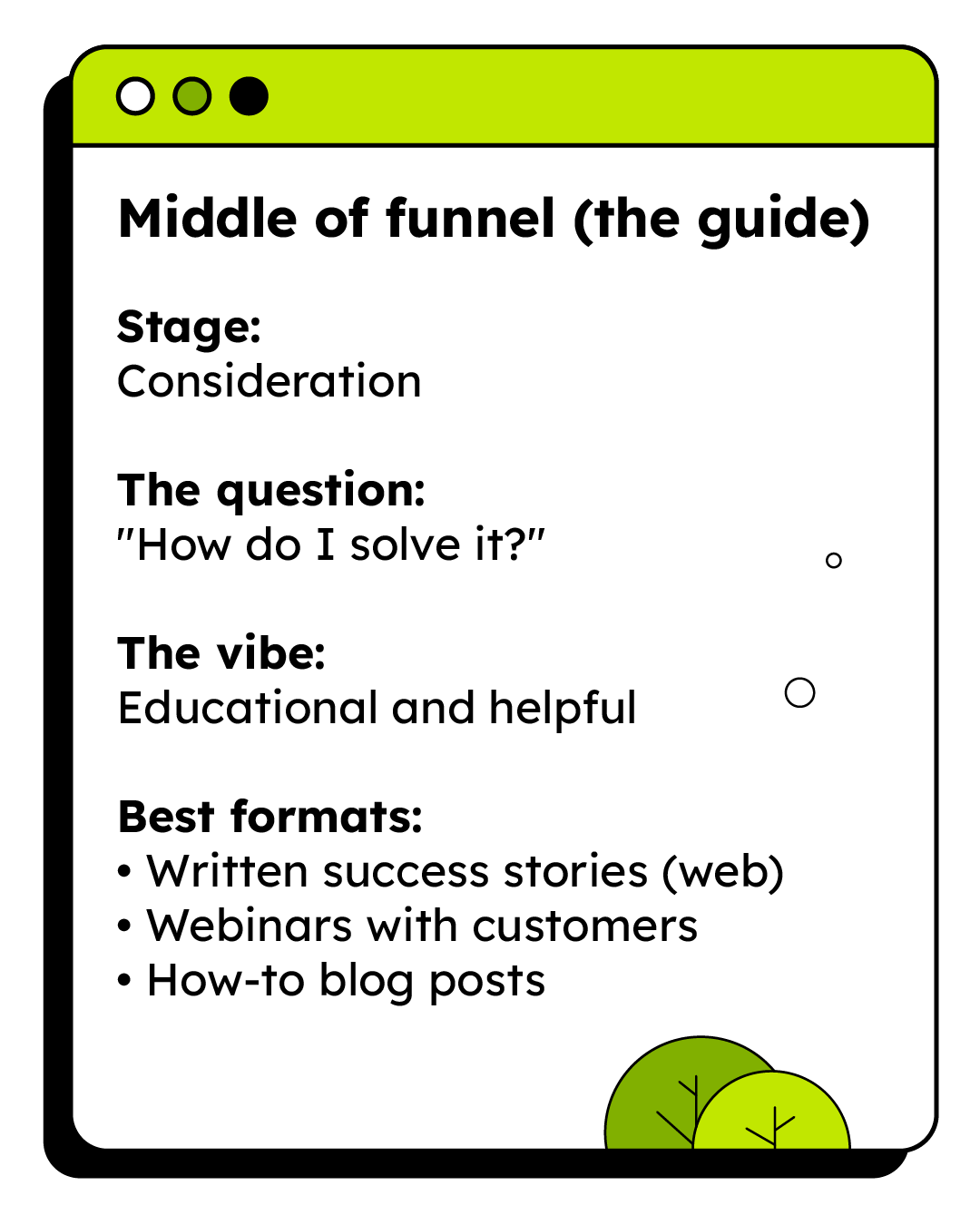
Middle of the funnel (consideration): prove it’s possible
Now they know who you are, they are asking, “Can you actually solve my problem?” They are educating themselves on solutions.
- The goal: education and credibility.
- The format: full written case studies, how-to webinars featuring customers and slide carousels.
- The angle: focus on the “how”. Explain the implementation process and the partnership. Show them what working with you actually looks like.
- Example: a written story detailing how Company X moved from legacy servers to the cloud in three months with your help.
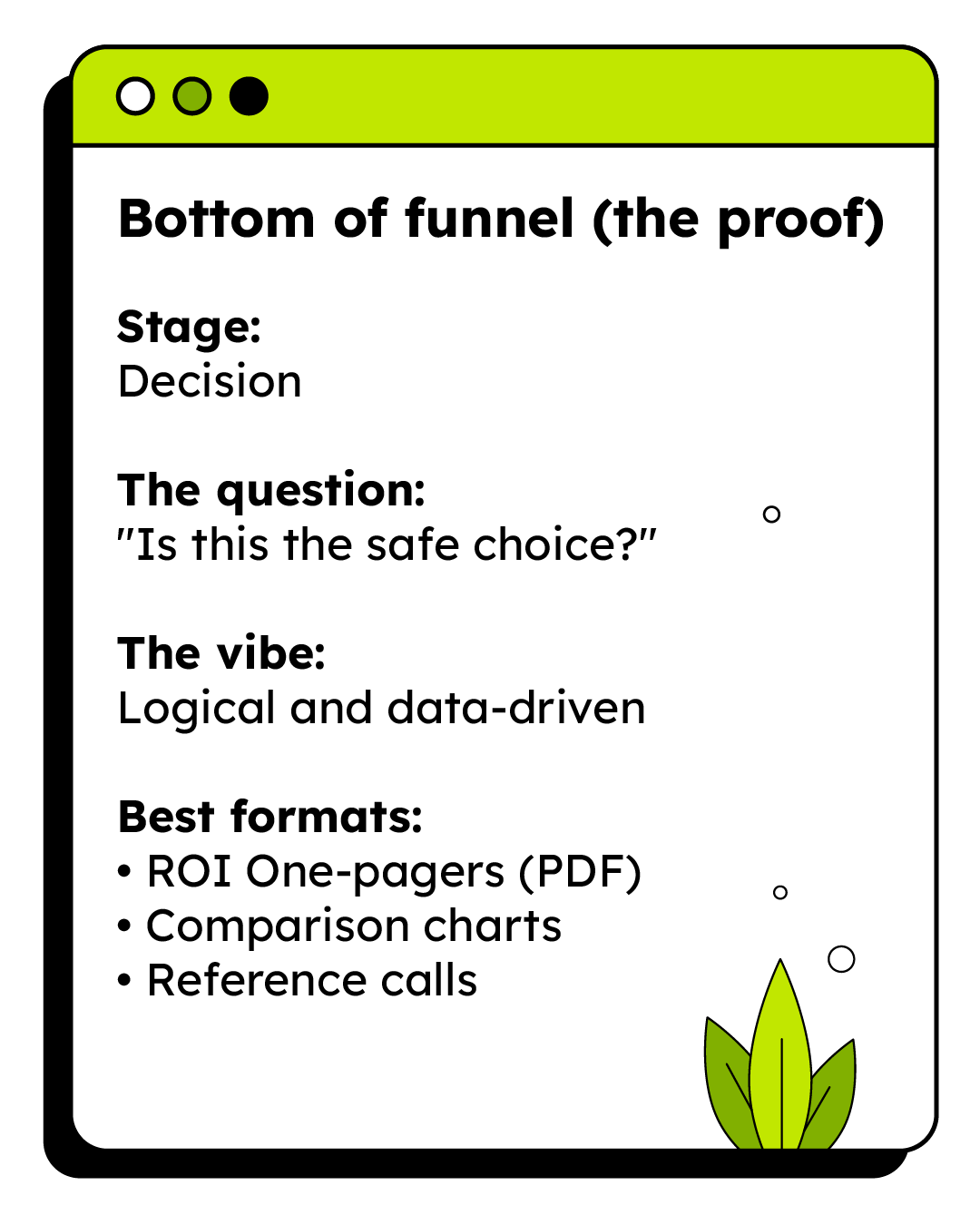
Bottom of the funnel (decision): mitigate the risk
This is the sales enablement zone. The prospect is ready to buy but needs to justify the decision to their boss (or themselves). They need hard proof.
- The goal: validation and ROI.
- The format: ROI one-pagers, detailed stat graphics, reference calls and deep-dive technical videos.
- The angle: focus on the result. Use hard numbers, percentage growth and money saved.
- Example: a one-page PDF titled “How we saved Client Y $2M in operational costs” designed specifically for the CFO to read.
The gist
A great customer story isn’t just a story; it’s a strategic tool. By serving the right story at the right time, you move prospects from “Who are you?” to “Where do I sign?”
This is how to keep your content strategy on track: